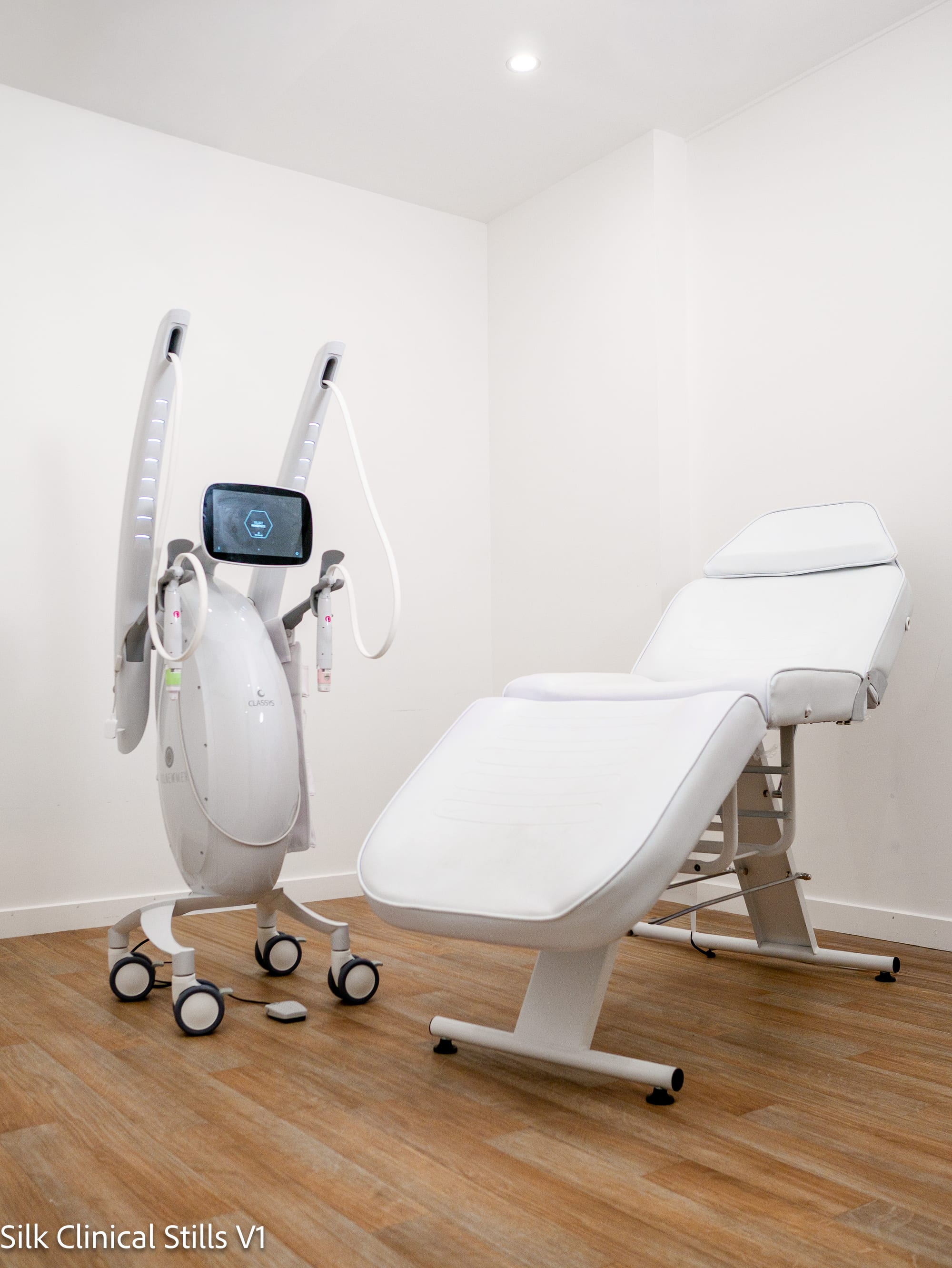
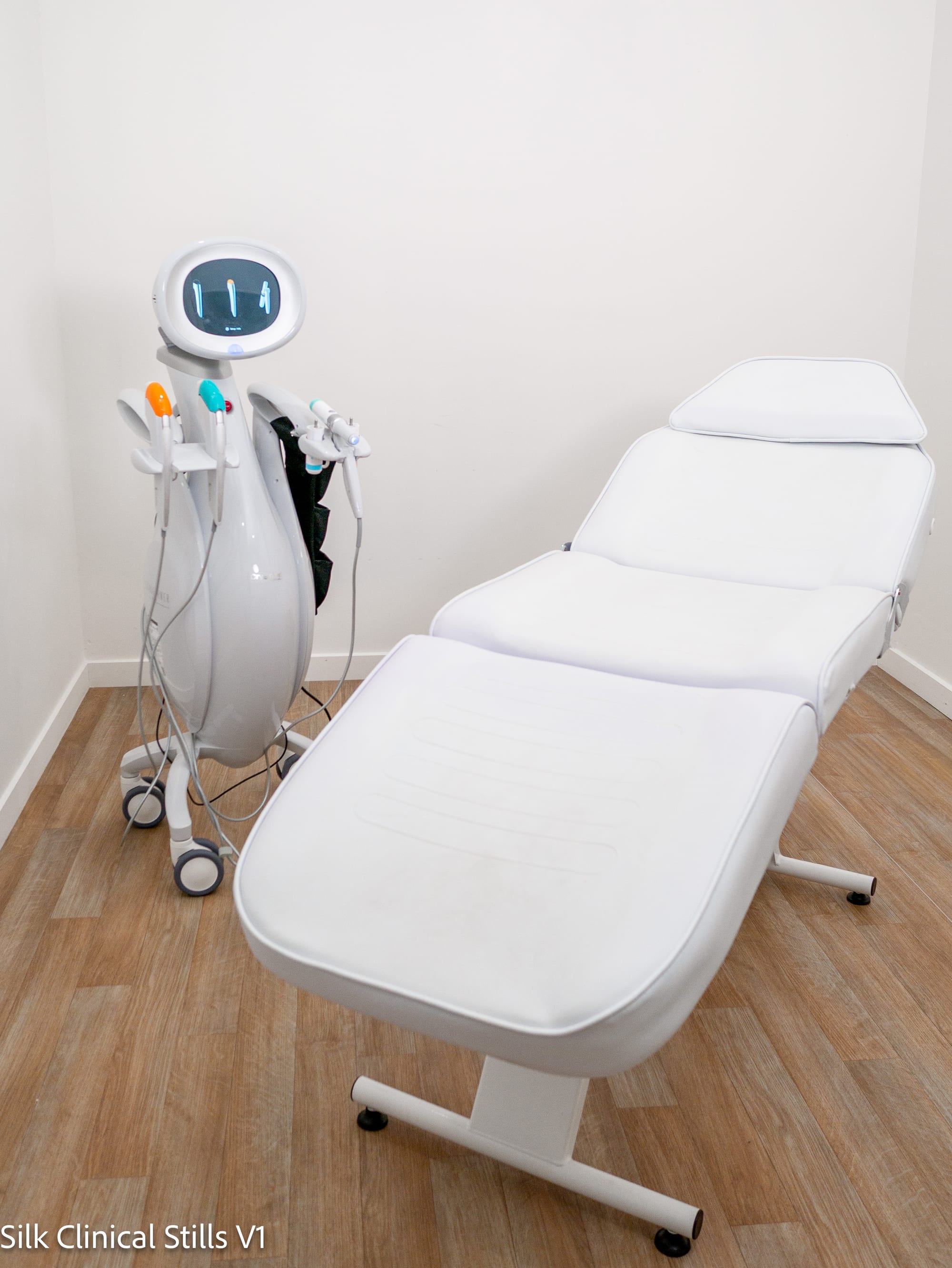
If you have been researching non-surgical skin tightening, you have probably come across two dominant technologies: radiofrequency (RF) and high-intensity focused ultrasound (HIFU). Both are proven, clinically effective treatments for skin laxity, but they work through fundamentally different mechanisms and target different tissue depths. Understanding those differences is essential for choosing the right treatment for your concerns.
At Silk Clinical, we offer both the Volnewmer RF system and the Ultraformer MPT HIFU device. As a registered nurse, I regularly assess which technology (or combination) will deliver the best outcomes for each patient. Here is a detailed comparison to help you understand your options.
How Radiofrequency (Volnewmer) Works
Radiofrequency skin tightening uses electromagnetic energy to heat the dermal layers of the skin. The Volnewmer system delivers controlled RF energy that raises the temperature of dermal collagen fibres to between 40 and 45 degrees Celsius. At this temperature, existing collagen contracts and tightens, producing an immediate mild firming effect. More importantly, the controlled thermal injury triggers a wound healing response that stimulates new collagen production (neocollagenesis) over the following weeks and months.
RF energy works primarily in the dermis, the middle layer of the skin that contains the majority of your collagen and elastin. This makes it particularly effective for improving skin texture, reducing fine lines, and addressing superficial to moderate skin laxity. The Volnewmer also delivers energy evenly across the treatment area, making it excellent for broad, uniform skin quality improvement.
How HIFU (Ultraformer MPT) Works
HIFU takes a completely different approach. The Ultraformer MPT uses focused ultrasound energy to create precise thermal coagulation points at specific depths beneath the skin. The key word is "focused." Rather than heating a broad area, HIFU concentrates energy into tiny focal points that reach temperatures of 60 to 70 degrees Celsius, creating micro-injuries at exact tissue depths.
What truly sets HIFU apart is its ability to target the SMAS (superficial musculoaponeurotic system) layer. This is the same tissue layer that surgeons manipulate during a traditional facelift. The SMAS sits beneath the skin and subcutaneous fat, and tightening it produces a genuine lifting effect rather than just surface-level firming. The Ultraformer MPT offers multiple cartridges that can target depths of 1.5mm, 3.0mm, 4.5mm, 6.0mm, and 9.0mm, allowing us to treat from the superficial dermis all the way down to the deep SMAS layer.
Key Differences at a Glance
Depth of treatment: RF primarily targets the dermis (1 to 3mm depth). HIFU can target from 1.5mm all the way to 9mm, including the SMAS layer that RF cannot reach.
Mechanism: RF heats tissue broadly and uniformly. HIFU creates focused micro-coagulation points at precise depths.
Primary effect: RF excels at skin quality improvement, texture refinement, and mild tightening. HIFU excels at lifting and tightening deeper structural tissue.
Comfort level: RF treatments are generally very comfortable, often described as a warm massage. HIFU involves brief moments of focused energy delivery that some patients find moderately uncomfortable, though the Ultraformer MPT's micro-pulsed technology has significantly improved the comfort profile compared to older HIFU devices.
Downtime: Both treatments involve minimal downtime. RF typically causes mild redness that resolves within hours. HIFU may produce mild swelling or tenderness that resolves within one to three days.
When RF Is the Better Choice
I tend to recommend the Volnewmer RF when a patient's primary concerns are skin texture, fine lines, mild skin laxity, or overall skin quality improvement. RF is also an excellent choice for patients in their late twenties to mid-thirties who are looking to maintain skin quality and get ahead of early signs of ageing. It works beautifully on the face and neck and is particularly effective for areas where uniform heating delivers the best results.
RF is also a strong option for patients who prefer a very comfortable treatment experience or who want to ease into non-surgical skin tightening before considering more intensive options.
When HIFU Is the Better Choice
I recommend the Ultraformer MPT HIFU when a patient needs genuine lifting and structural tightening. This includes concerns like jowling, a softening jawline, mid-face descent, or laxity along the neck and submental area. HIFU is typically most impactful for patients in their late thirties through to their sixties, where collagen loss has progressed enough that deeper tissue remodelling is needed.
HIFU is also the preferred choice when a patient wants the closest non-surgical alternative to a surgical facelift, as it is the only non-invasive technology that can reach and tighten the SMAS layer.
Can You Combine Both Treatments?
Absolutely, and this is often the approach I recommend for patients who want comprehensive results. RF and HIFU complement each other because they target different tissue depths and structures. A typical combination protocol might involve HIFU to address deeper structural laxity and lifting, followed by RF sessions to refine skin quality and texture in the superficial layers.
At Silk Clinical, we often design treatment plans that incorporate both technologies over a series of sessions, spaced appropriately to allow collagen remodelling between treatments. The combination approach can deliver results that neither technology achieves on its own.
Realistic Expectations
Both RF and HIFU produce gradual results. The collagen remodelling process takes time, with most patients seeing progressive improvement over two to six months following treatment. Neither technology replicates the results of surgery, and patients with significant skin laxity may need a series of treatments or ultimately be better candidates for surgical intervention.
For RF, a typical protocol involves three to six sessions spaced two to four weeks apart, with maintenance sessions every three to six months. For HIFU, most patients benefit from one to two sessions per year, with results building over three to six months after each treatment.
Frequently Asked Questions
Is RF or HIFU better for a double chin?
For submental fullness (a double chin), HIFU is generally the stronger choice because it can target the deeper tissue layers responsible for structural support in the chin and neck area. However, if the concern is primarily skin texture and mild laxity rather than deeper structural looseness, RF can also be effective. During your consultation, I will assess your specific anatomy and recommend the best approach.
How painful are these treatments?
RF with the Volnewmer is very comfortable for most patients, typically described as a warm, pleasant sensation. HIFU with the Ultraformer MPT involves brief pulses of focused energy that can cause momentary discomfort, but the micro-pulsed technology makes it significantly more tolerable than older HIFU devices. Most patients manage HIFU well without any numbing, though topical anaesthetic is available if needed.
How soon will I see results?
With both treatments, you may notice a mild immediate tightening effect. However, the significant results come from new collagen production, which develops gradually over two to six months. Patience is important, as the biological process of collagen remodelling cannot be rushed.
Can I have RF or HIFU if I have fillers or Botox?
Yes. Both RF and HIFU are compatible with injectable treatments. I typically recommend waiting at least two weeks after injectable treatments before having RF or HIFU, and vice versa. We will discuss your full treatment history during your consultation to ensure everything is sequenced safely.
Which treatment has more downtime?
Neither treatment involves significant downtime. RF usually causes only mild redness that fades within a few hours. HIFU may produce mild swelling, tenderness, or occasional tingling that resolves within one to three days. Most patients return to their normal activities immediately after either treatment.
Filed underRFHIFUskin tighteningVolnewmerUltraformer MPT