Something shifts in your forties. The face you see in the mirror starts to look subtly different from the one you remember. Your jawline is not as crisp as it used to be, your skin does not bounce back the way it once did, and lines that used to appear only when you smiled or frowned have started to settle in permanently. These changes are entirely normal, but that does not mean you have to accept them without question.
As a registered nurse specialising in aesthetic treatments, I see patients in their forties, fifties, and beyond every week. The good news is that non-surgical skin tightening technology has advanced dramatically, and there are now genuinely effective options for addressing skin laxity without going under the knife. Here is what you need to know.
Why Skin Changes After 40
Understanding why your skin is changing helps you make better treatment decisions. Several biological processes accelerate in your forties:
Collagen decline: From your mid-twenties onward, your body produces approximately one percent less collagen each year. By the time you reach forty, you may have lost 15 to 20 percent of your skin's collagen compared to your twenties. Collagen is the structural protein responsible for skin firmness, so this steady decline directly translates to increasing laxity.
Elastin degradation: Elastin is the protein that gives skin its ability to snap back into place after being stretched. Unlike collagen, your body produces very little new elastin after puberty. The elastin you have gradually breaks down over decades, and by your forties, the effects of this degradation become visible as skin that sags and does not recover its shape.
Volume loss: Fat pads in the face thin and shift downward with age. This loss of volume compounds the effects of collagen and elastin decline, contributing to hollow temples, flattened cheeks, and deeper nasolabial folds.
Bone resorption: Even your facial bones change with age, with gradual resorption reducing the structural scaffolding that supports your skin and soft tissue.
Hormonal changes: For women approaching or in menopause, declining oestrogen levels accelerate collagen loss. Studies suggest that women lose up to 30 percent of their skin collagen in the first five years after menopause.
The Most Effective Non-Surgical Treatments
At Silk Clinical, I focus on two core technologies for non-surgical skin tightening, both of which have strong clinical evidence supporting their effectiveness.
Volnewmer Radiofrequency (RF)
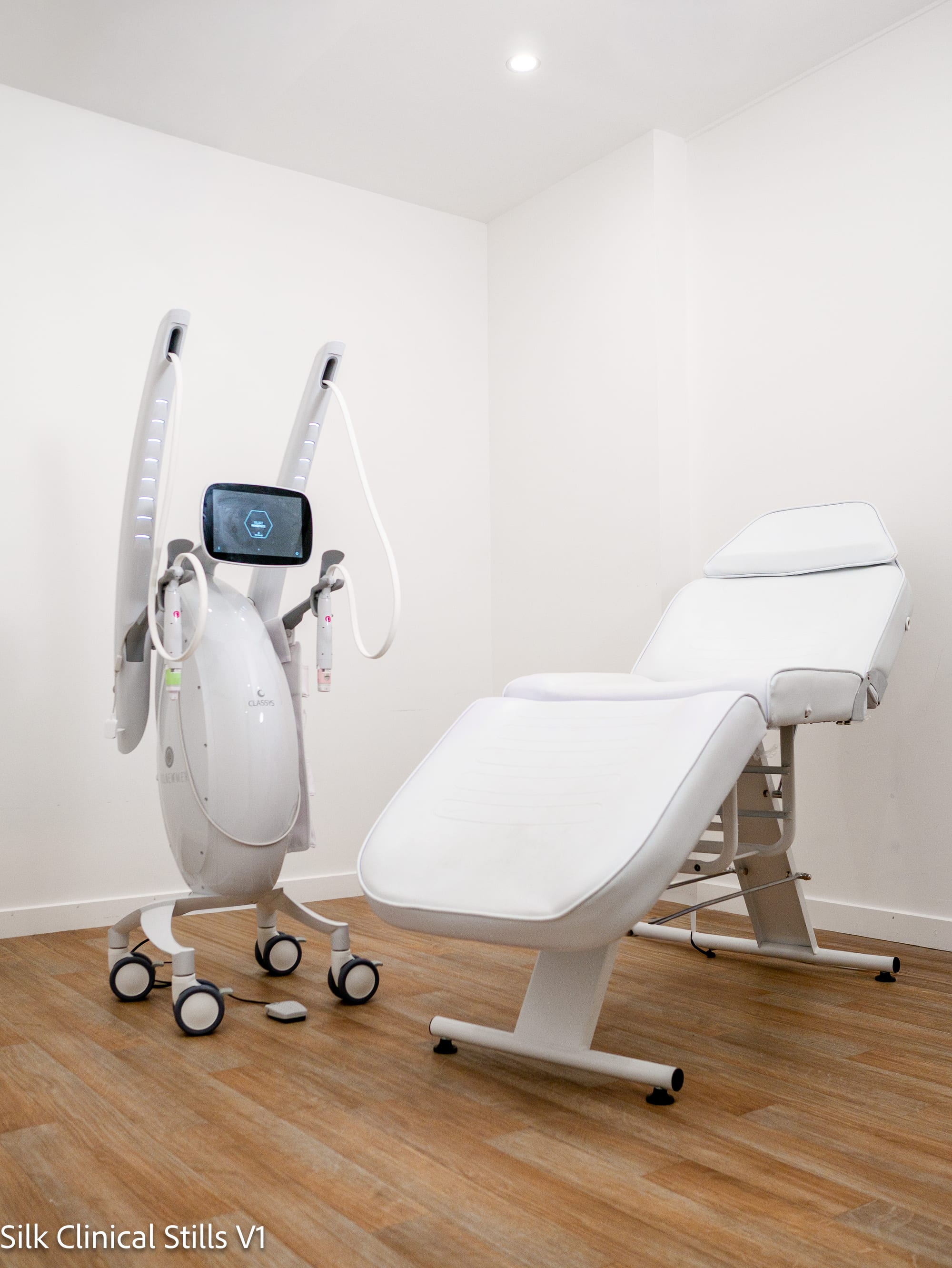
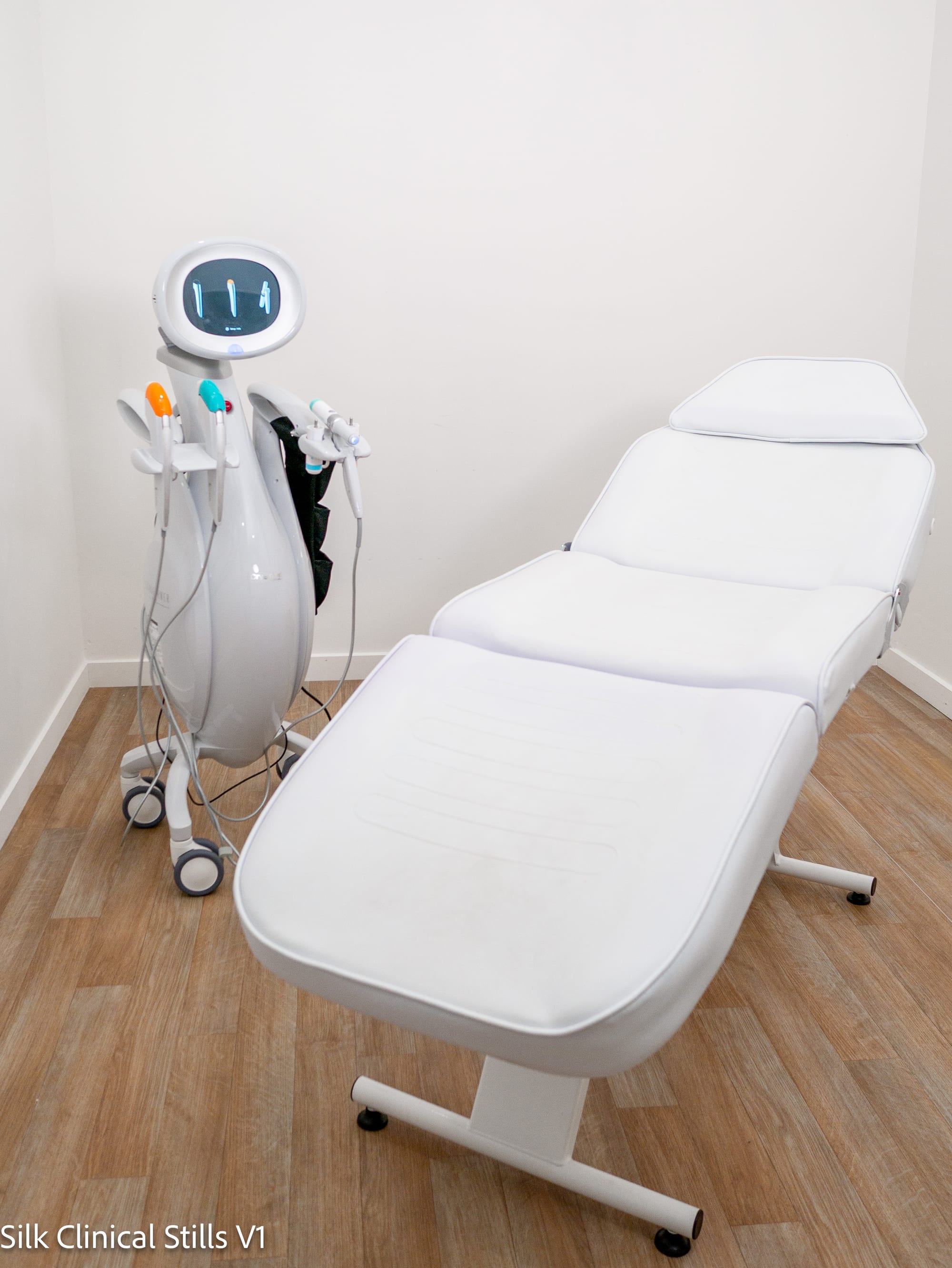
The Volnewmer RF system delivers controlled radiofrequency energy to heat the dermal layer of the skin. This heat causes existing collagen fibres to contract (producing an immediate mild tightening effect) and stimulates the production of new collagen over the following months.
RF is particularly effective for improving overall skin quality, texture, and mild to moderate laxity. It works well on the face, neck, and decolletage. For patients over 40, RF provides a foundation of skin quality improvement that enhances the effects of other treatments.
A typical RF protocol involves three to six sessions spaced two to four weeks apart. Results develop progressively and peak at around three to four months after the final session.
Ultraformer MPT (HIFU)
High-intensity focused ultrasound (HIFU) with the Ultraformer MPT is the standout treatment for patients who need genuine lifting and structural tightening. Unlike RF, which works primarily in the dermis, HIFU delivers focused ultrasound energy deep into the tissue, reaching the SMAS layer at 4.5mm depth and beyond.
The SMAS is the same tissue layer that surgeons tighten during a facelift. By targeting this layer non-invasively, HIFU can produce a measurable lifting effect along the jawline, mid-face, and neck. For patients over 40 who are noticing jowling, a softening jawline, or mid-face descent, HIFU is often the most impactful single treatment available.
The Ultraformer MPT offers multiple treatment depths (1.5mm, 3.0mm, 4.5mm, 6.0mm, and 9.0mm), which allows me to customise each treatment to target the specific tissue layers that need attention. Most patients benefit from one to two HIFU sessions per year, with results continuing to improve over three to six months after each treatment.
Combination Treatment Plans
For patients over 40, I frequently recommend combining both technologies for comprehensive results. A typical combination plan might look like this:
- Start with HIFU to address deeper structural laxity and provide a lifting foundation
- Follow with a series of RF sessions to improve skin quality, texture, and superficial tightening
- Maintain results with periodic HIFU sessions (once or twice per year) and RF top-ups every three to six months
This layered approach addresses skin ageing at multiple tissue depths and delivers results that are greater than what either technology achieves alone.
How to Prioritise Your Treatments
If you are new to non-surgical skin tightening and feel overwhelmed by the options, here is a practical framework for prioritising:
If your primary concern is a softening jawline or jowling: Start with HIFU. This is where you will see the most significant structural improvement.
If your primary concern is overall skin quality, texture, and fine lines: Start with RF. It delivers excellent results for surface-level concerns.
If you want comprehensive rejuvenation: Invest in a combination plan that addresses both deep structural support and surface skin quality.
If budget is a consideration: Start with the treatment that addresses your most significant concern, and build on that foundation over time. There is no requirement to do everything at once.
Realistic Expectations for Mature Skin
Honesty matters more than optimism when it comes to treating mature skin. Here is what I tell my patients:
Non-surgical treatments will not replicate the results of a surgical facelift. If you have significant skin laxity, particularly if you have very thin skin or substantial volume loss, the degree of improvement achievable with energy-based devices has biological limits.
That said, the right non-surgical treatment plan can produce visible, meaningful improvement in skin firmness, jawline definition, and overall facial contour. Most patients report that they look refreshed and more youthful without looking "done" or dramatically different.
Results are cumulative and progressive. Collagen remodelling takes time, typically two to six months. Patience is essential, and consistency with your treatment plan matters more than any single session.
Maintenance Matters
Skin tightening is not a one-and-done treatment. Your skin continues to age after treatment, so maintaining your results requires ongoing commitment. For most patients over 40, I recommend:
- HIFU: one to two sessions per year
- RF: maintenance sessions every three to six months
- A quality home skincare routine that includes SPF, retinoids, and antioxidants
- Healthy lifestyle factors including adequate hydration, balanced nutrition, quality sleep, and sun protection
Why Registered Nurse Expertise Matters
Non-surgical skin tightening might sound straightforward, but achieving optimal results requires a thorough understanding of facial anatomy, tissue response, and treatment planning. The difference between a mediocre result and an excellent one often comes down to the skill and knowledge of the practitioner.
At Silk Clinical, all treatments are performed by registered nurses with specific training in aesthetic medicine. We assess your individual anatomy, customise treatment parameters to your tissue type and concerns, and adjust our approach based on how your skin responds over time. This level of clinical expertise is what separates a thoughtful, effective treatment plan from a generic, one-size-fits-all approach.
Frequently Asked Questions
Am I too old for non-surgical skin tightening?
There is no strict upper age limit for these treatments. The key factors are your skin quality, overall health, and the degree of laxity you want to address. I have treated patients well into their sixties and seventies with excellent results. During your consultation, I will give you an honest assessment of what is achievable for your specific situation.
How much does a skin tightening treatment plan cost?
Costs vary depending on the treatments included and the areas being treated. At Silk Clinical, I provide a detailed, transparent quote during your consultation. We also offer payment plan options to make treatment more accessible. Rather than quoting a generic price range, I prefer to assess your needs and provide pricing that reflects your specific treatment plan.
Is there any downtime?
Both RF and HIFU involve minimal downtime. RF typically causes only mild redness that fades within hours. HIFU may produce mild swelling or tenderness for one to three days. Most patients return to work and social activities immediately or the following day.
Can non-surgical skin tightening replace a facelift?
It depends on your starting point and your goals. For mild to moderate skin laxity, non-surgical treatments can deliver satisfying results that delay or eliminate the need for surgery. For severe laxity, these treatments can improve your appearance but will not replicate a surgical outcome. I will always give you an honest assessment during your consultation.
When should I start skin tightening treatments?
The best time to start is before significant laxity develops. Prevention is always easier than correction. However, it is never too late to benefit from treatment. Whether you are 40 or 65, there are options that can meaningfully improve your skin quality and firmness. The sooner you start, the more effectively you can maintain and build on your results.
Filed underskin tighteningover 40collagenageing skinChristchurch